When most people hear the term artificial intelligence, they instantly picture ChatGPT composing an email or summarising a report. But equating AI solely with text generation is like judging the entire internet by a single website. Modern AI is far broader, touching nearly every business function – from sales pipelines to production floors, supply chains to customer service desks.
By embracing AI strategically, companies can do more than just automate repetitive work: they can interpret data in real time, reduce operational risks, streamline decision-making, and unlock a competitive advantage that scales.
This article explores how AI is reshaping real-world business processes across industries, which technologies drive these changes, and how organisations can begin their own AI journey with confidence.
From Hype to Reality: What AI Actually Means
Artificial intelligence is not one monolithic system but a family of technologies: machine learning, deep learning, natural language processing (NLP), computer vision, and robotic process automation (RPA). Together, these tools enable software to recognise patterns in massive datasets, make decisions at speed, and adapt dynamically to new inputs.
Unlike traditional IT systems, AI excels in three dimensions: speed, scalability, and adaptability. That means an AI-powered chatbot, a predictive maintenance tool, or a generative design engine can tackle tasks that once required significant human effort – freeing employees to focus on innovation and strategy.
Where AI Creates Impact: Business Processes That Benefit Most
The sweet spot for AI is where data is abundant, tasks are repetitive, and decisions are time-sensitive. These are the areas where automation and intelligent analytics transform both cost structures and accuracy. Examples include:
- Email triage and prioritisation
- Business intelligence through real-time analytics
- Generative content production
- Predictive maintenance in factories
- AI-driven lead qualification in sales
- Smart chatbots for customers and employees
- Automated contract and invoice processing
Far from replacing creativity, AI removes friction. Eliminating low-value work it gives humans more space to collaborate, innovate, and build stronger customer relationships.
Sales and Marketing: Turning Data into Revenue
AI has become indispensable for commercial teams. Sales departments use machine learning to identify promising leads and forecast conversion potential with far greater accuracy than gut feeling. Marketing professionals deploy generative AI to draft tailored messages, social media posts, and landing pages that resonate with customer preferences.
Customer relationship management tools enriched with AI – such as Salesforce, HubSpot, or Adobe – help analyse surveys, reviews, and online interactions. The outcome: smarter segmentation, dynamic pricing strategies, loyalty-building insights, and campaign optimisation in real time.
Key benefits for sales and marketing include:
- Predictive analytics for customer intent
- AI-based lead scoring and conversion forecasting
- Personalised communication powered by generative tools
- Automated A/B testing and content optimisation
- Social media scheduling and content recommendations
Manufacturing: Smarter, Safer, Faster
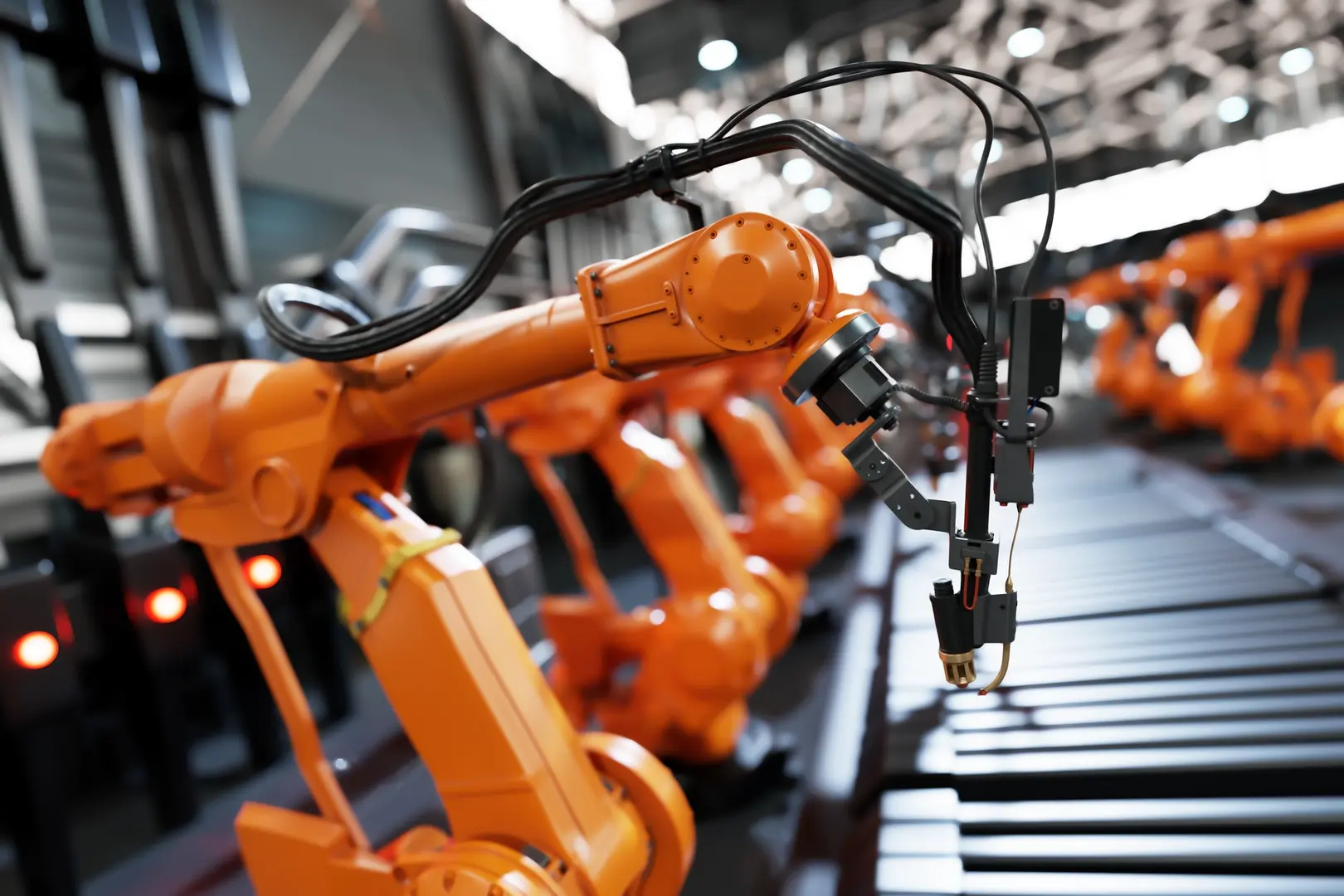
Factories are increasingly intelligent ecosystems where IoT sensors feed real-time data into AI engines. This combination enables predictive maintenance, fault detection, and workflow optimisation at unprecedented scale.
Instead of routine, calendar-based servicing, machines are now maintained exactly when needed – extending their lifespan and reducing costly downtime. In parallel, generative AI accelerates product design by simulating variations and suggesting optimised prototypes, shortening development cycles and reducing R&D expenses.
AI advantages in production include:
- Early anomaly detection and root cause analysis
- Predictive servicing for cost control
- Generative product design for faster iteration
- Automated adjustments to production parameters
- Data-driven workflow optimisation
Supply Chains: From Complexity to Clarity
Supply chain disruptions have become the norm, not the exception. AI technologies provide agility by forecasting demand, managing inventories, and optimising routes. With machine learning, companies align procurement with market signals, anticipate bottlenecks, and minimise waste.
Generative AI can even project market trends, guiding strategic purchasing decisions. Sustainability goals also benefit: optimised logistics reduce travel distances, cut fuel usage, and lower CO₂ emissions. Meanwhile, RPA takes over the tedious work of customs paperwork, shipping logs, and invoices.
Impact on supply chain management:
- Improved demand forecasting and stock control
- Dynamic route optimisation using live data
- Lower emissions and reduced delivery times
- Automated document handling for shipments
- Early detection of supply chain risks
Human Resources: A People-First Approach to AI
In HR and recruiting, AI is shifting focus back to people by removing administrative burdens. Intelligent systems screen résumés, evaluate candidate fit, and even predict turnover risk with precision.
Once employees join, AI helps personalise their experience – suggesting tailored training programs, monitoring engagement, and offering 24/7 chatbot assistance for HR queries or onboarding support.
AI in HR enables:
- Automated applicant evaluation
- Predictive analytics for retention and engagement
- Personalised learning and career development paths
- Always-available chatbot support
- Insightful analysis of employee feedback and communication
Customer Support: Consistency Meets Personalisation
Customer service is one of the most visible beneficiaries of AI. NLP-powered chatbots answer FAQs instantly, while smart routing ensures complex issues are directed to the right human agents.
Historical data and behavioural patterns inform tailored, real-time responses, creating smoother interactions. In finance and e-commerce, fraud detection features powered by AI also integrate into service desks – spotting anomalies during live transactions.
Business gains in customer support:
- 24/7 availability with instant response
- Intelligent case routing
- Context-aware, personalised replies
- Reduced handling time and costs
- Natural, conversational interactions
How to Begin: The Path to the Right AI Solution
Implementing AI is less about technology than about clarity of purpose. Companies must start by asking:
- Which tasks are slow, costly, or error-prone?
- Where do repetitive processes consume resources?
- Which datasets are structured enough to fuel AI?
- What long-term vision exists for AI adoption?
A proven framework is SMART:
- Specific goals
- Measurable KPIs
- Attractive value for teams
- Realistic scope
- Time-bound implementation
Starting small with a pilot project reduces risk and builds confidence. Success relies on transparent communication, a cross-functional team (IT, operations, leadership, external advisors), and a willingness to adapt.
Data Quality: The Non-Negotiable Foundation
AI is only as good as the data behind it. Poor-quality datasets yield poor predictions. Before launching models, businesses should evaluate the completeness, structure, and integrity of their data.
Beyond productivity, data analysis also strengthens risk management. AI helps forecast operational vulnerabilities, detect compliance issues, and reduce exposure to security threats – critical in regulated industries.
Linvelo’s Offer: A Free Brainstorming Session
For many small and mid-sized businesses, the biggest hurdle is simply knowing where to begin. Linvelo offers free initial brainstorming sessions to map out realistic use cases and calculate potential ROI.
The goal is to co-create a roadmap: identifying high-impact pilot projects, aligning AI solutions with company size and industry, and defining timelines for roll-out.

Are Your Processes AI-Ready?
Not every task requires AI, but many are well-suited. Look for:
- High repetition (form entry, system syncing)
- Data-heavy decisions (pricing, demand forecasts)
- Processes that scale with growth
Examples already in action:
- Invoice processing with RPA
- Dynamic pricing for e-commerce
- Lead nurturing with AI marketing
- Predictive maintenance for machinery
- Always-on customer chatbots
The earlier companies experiment with AI, the faster they see results: lower costs, higher efficiency, and smarter choices.
Conclusion: The Future of Work Is Here
Artificial intelligence isn’t just a buzzword; it’s a business reality. From HR to logistics, sales to customer service, AI solutions are changing how organisations operate.
Success lies not in adopting AI for AI’s sake but in selecting the right applications, ensuring clean data, and embedding solutions seamlessly into workflows. Companies that take these steps now secure growth, agility, and a lasting competitive edge.
Ready to Explore AI for Your Business?
Linvelo invites you to a free, no-obligation consultation. Together, we’ll identify the best opportunities for AI-powered transformation and craft a plan tailored to your business.
👉 Start today and discover how AI can reshape your operations.
Frequently Asked Questions
What’s the biggest benefit of AI in business?
The automation of repetitive tasks and data-driven decision-making leads to improved efficiency and frees resources for strategic growth.
How does AI improve customer support?
Chatbots manage inquiries 24/7, direct complex issues to the right agents, and provide personalised responses – resulting in faster resolution and happier customers.
What HR processes can AI enhance?
AI automates resume screening, predicts employee turnover, designs personalised learning paths, and supports wellness initiatives.
Why is data quality so critical?
High-quality data ensures reliable predictions. Inaccurate or incomplete datasets undermine AI outcomes and weaken ROI.
What services does Linvelo provide?
Linvelo delivers software development, digital strategy consulting, and tailored AI solutions – helping businesses optimise operations and scale sustainably.