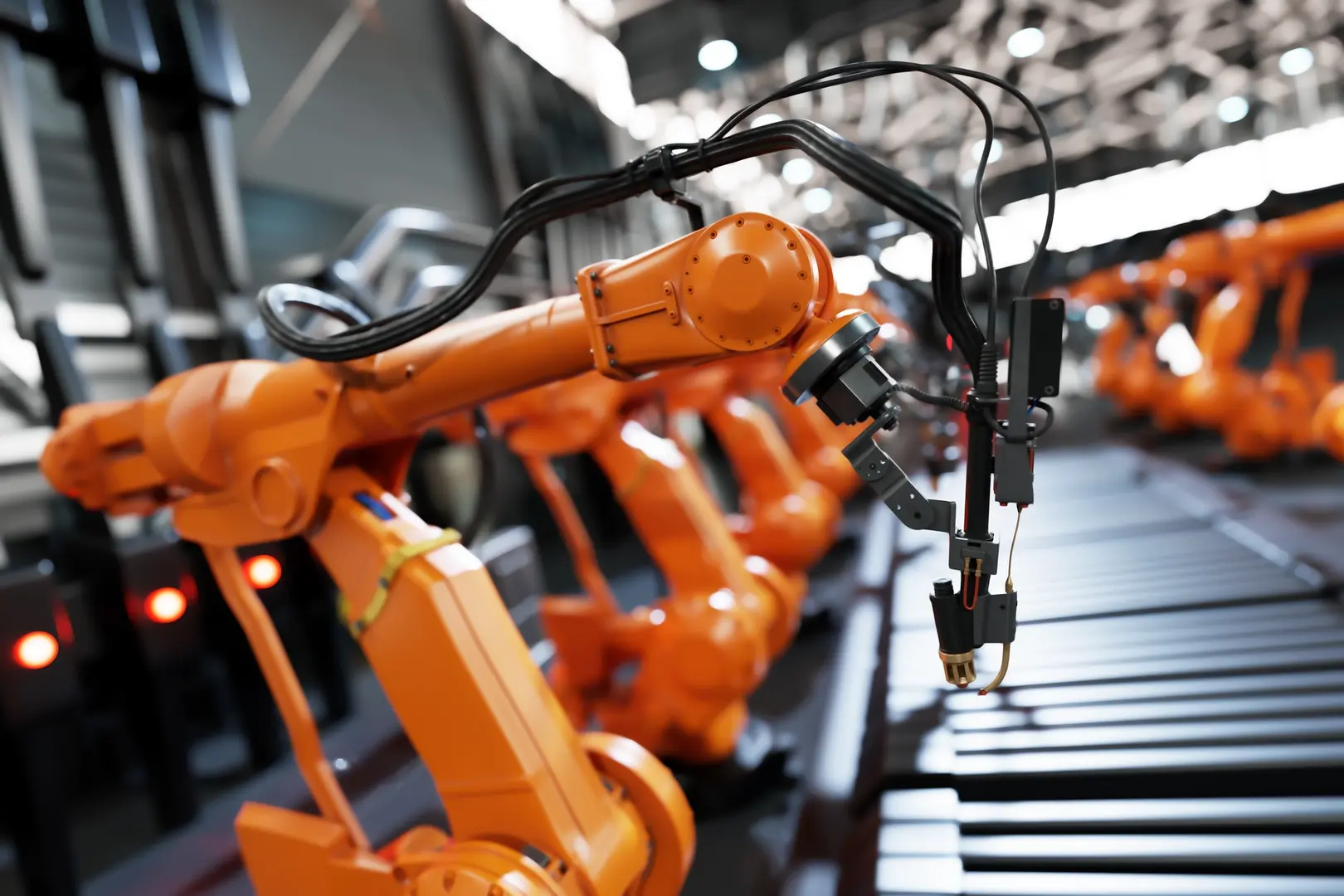
The strength of industrial AI depends entirely on the quality and variety of data it learns from. In practice, however, manufacturers often face the opposite: too little usable data, overly sensitive datasets, or a complete absence of examples – especially for rare breakdowns, hazardous scenarios, or brand-new equipment. Without this foundation, even state-of-the-art AI models fail to deliver consistent results.
Synthetic data offers a way out. By virtually recreating industrial environments and production dynamics, engineers can generate artificial datasets that capture real-world complexity – without halting machines, exposing staff to risks, or waiting for rare incidents to occur. Whether for predictive maintenance, anomaly detection, or automated inspections, these artificially produced images, sensor feeds, and time series are reshaping how companies design and deploy AI at scale.
Why Manufacturing Turns to Synthetic Data
AI applications in industry don’t live or die by algorithmic brilliance alone. Their value hinges on the origin and depth of training data. What matters most is whether the data covers the full spectrum of operational realities that machines must navigate.
In this domain, synthetic data refers to generated datasets that mimic physics, material behaviour, environmental influences, and production anomalies – without ever coming from a live factory floor. By leveraging simulation frameworks, digital twins, or generative AI engines, engineers can build datasets with labelled images, bounding boxes, classification markers, or synthetic sensor logs.
Unlike placeholder test files, synthetic datasets exhibit statistically consistent structures, natural variability, and realistic edge cases. That makes them particularly well-suited for training neural networks in areas like:
- Quality inspection – detecting cracks, surface flaws, or scratches
- Robotics – navigation and manipulation tasks
- Predictive maintenance – identifying weak signals in machine performance data
- Safety-critical systems – recognising hazards or triggering automated shutdowns
The outcome: highly customised datasets on demand, with no downtime, no privacy breaches, and no expensive manual labelling.
Why Artificial Beats the Real
Gathering “real” industrial data is often impractical: it’s slow, costly, and sometimes dangerous. Consider tasks like fault detection – collecting the necessary data would demand years of observation under countless lighting conditions, material states, and machine setups. Worse, rare edge cases may simply never appear during testing.
Synthetic data bypasses these obstacles. Instead of waiting for unpredictable events, companies use simulation, 3D modelling, and AI-powered workflows to recreate production scenarios digitally. The result? Rich datasets covering every variation engineers need.
Key advantages include:
- Lower Costs and Faster Delivery
Physical trials, sensors, and manual annotation are expensive. Synthetic data can cut AI project costs by 60–80% while shortening timelines from months to days, with millions of pre-labelled images produced automatically. - Scalability for Industry 4.0
Changing product lines or machinery no longer requires restarting data collection. Adjusting simulation parameters instantly produces new training data aligned with evolving production needs. - Risk-Free Safety Training
Hazardous conditions such as gas leaks or electrical failures can be digitally simulated, allowing AI models to recognise danger without endangering staff or equipment. - Privacy Protection
Synthetic datasets are free of sensitive details or proprietary secrets, enabling safe collaboration across teams and partners while remaining fully GDPR-compliant.
Building Synthetic Data for Industrial Use
Producing high-value synthetic datasets is far from trivial. It requires generative AI methods fused with precise simulation of physics and environments.
Generative Models at the Core
- GANs generate realistic defects or wear patterns.
- VAEs expand existing datasets by simulating new variations.
- Diffusion models create highly detailed, controllable industrial images.
Bridging with Simulation
Platforms like NVIDIA Omniverse replicate entire production lines – machines, materials, and conditions included. This lets engineers train and stress-test AI systems across thousands of scenarios, from routine cycles to extreme edge cases.
Scaling via Cloud
The computational demands are immense. Cloud services like AWS or Azure provide elastic GPU clusters, enabling even mid-sized manufacturers to produce industrial-grade datasets without owning supercomputers.
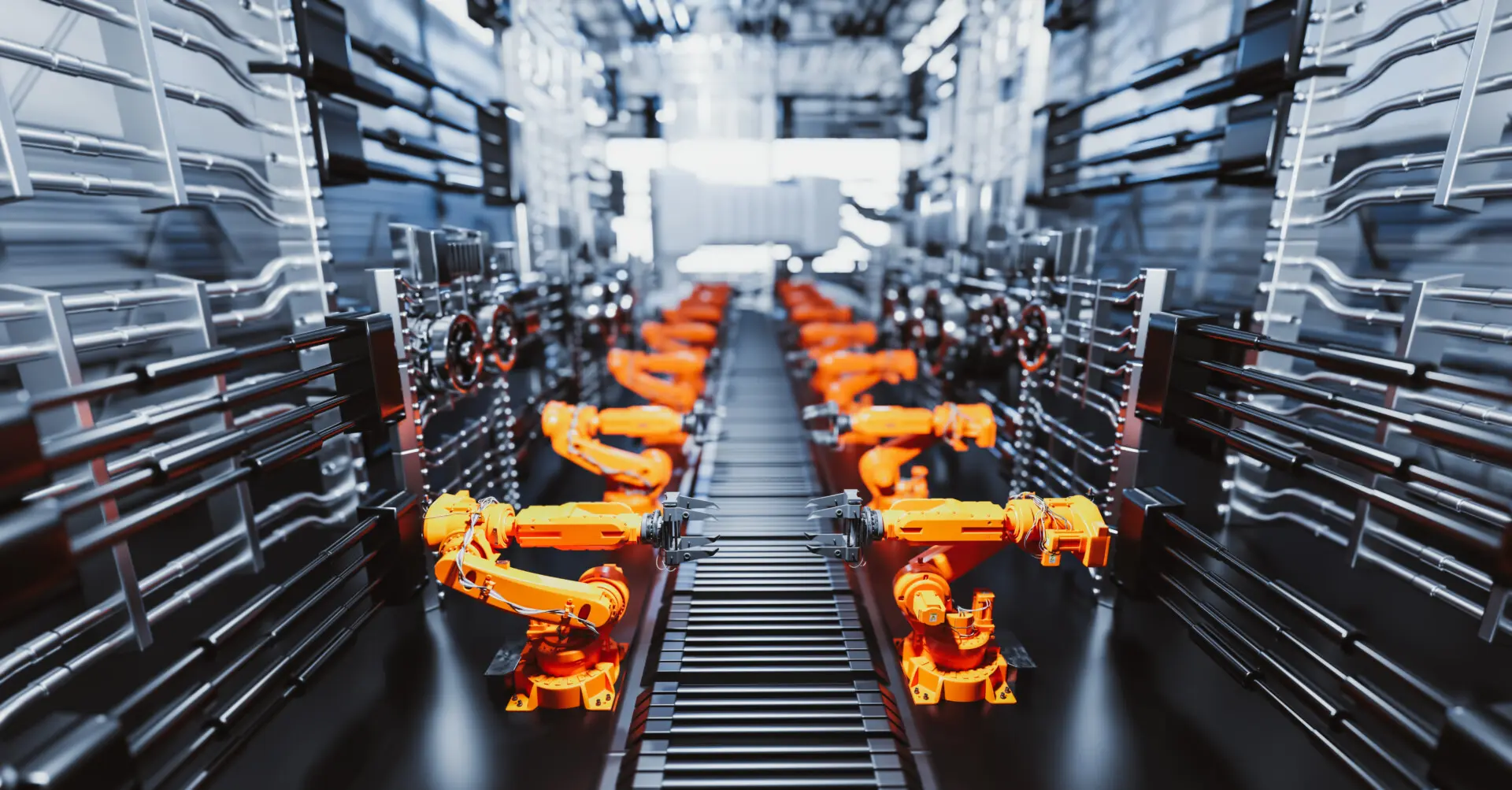
Where Synthetic Data Delivers Value
- Visual Quality Control: Automakers simulate scratches or misalignments, improving defect detection accuracy by up to 40%.
- Predictive Maintenance: Simulated turbine wear helps anticipate failures, reducing downtime by over 25% in real projects.
- Robotics: Robots learn navigation and handling tasks safely in virtual facilities before deployment.
- Emergency Scenarios: AI systems are trained to react to fires, leaks, or pressure bursts without real-world risk.
The Challenges Ahead
Synthetic data is powerful, but not without barriers:
- High Initial Effort: Accurate CAD models and physics-based knowledge are prerequisites, often lacking for older equipment.
- The Sim-to-Real Gap: Models trained purely on synthetic inputs can struggle when transferred to real-world conditions.
- Skill Shortage: Expertise in simulation, AI, and industrial processes is rare and costly.
A hybrid approach – combining synthetic with real-world samples – is often the best route for mission-critical use cases.
Linvelo’s Role
Synthetic data has already begun reshaping how industries build AI for inspection, maintenance, and safety. But realising its full potential requires infrastructure, expertise, and careful integration.
At Linvelo, over 70 engineers and consultants specialise in bridging this gap. From creating digital twins to running domain randomisation experiments, we support industrial teams in turning synthetic data projects into measurable outcomes.
👉 Contact us today to accelerate your AI journey.
FAQ
What is synthetic data in industrial AI?
It is artificially generated data – mirroring signals, materials, or images – crafted to support machine learning without drawing from live production.
When is it most useful?
In cases where data is scarce, dangerous, or too costly to capture, rare defects, critical safety scenarios, or early model training stages.
How much effort is required?
Digitally advanced teams can get started within weeks. Others may need to build digital twins first, requiring more time and resources.
Can synthetic data be safely shared?
Yes. Since it excludes personal or sensitive details, it is GDPR-compliant and safe for collaboration across sites and partners.